Too Big for the Frame
There is something faintly cruel about a cinematic frame.
It decides what belongs inside.
And therefore, what sticks out.
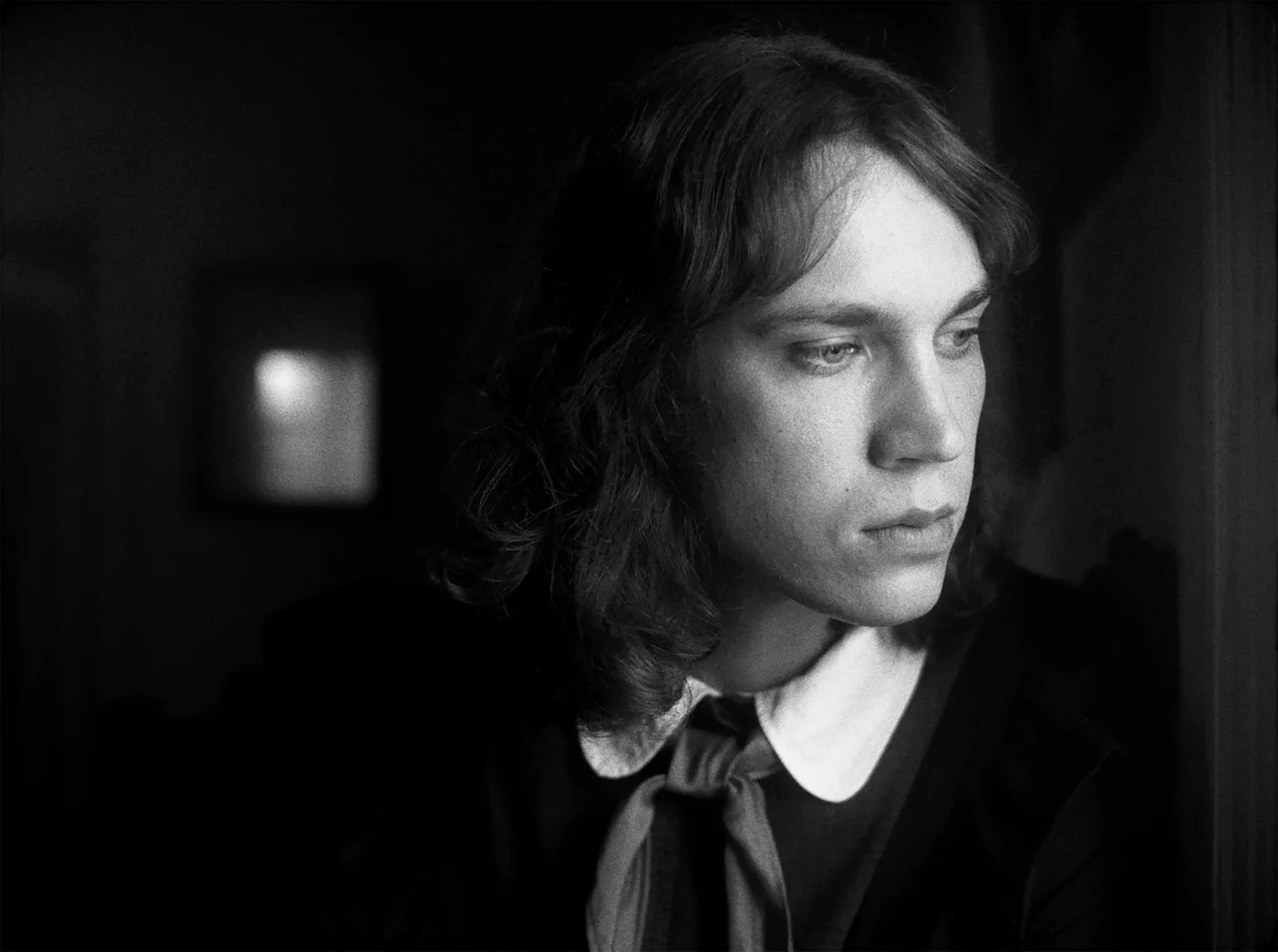
In Ulya, Viesturs Kairišs chooses the nearly square proportions of 1.33:1 and places within them a teenage girl who seems to have spent her life exceeding everything: class photographs, clothes made for her age, other people’s idea of what a girl should look like, perhaps even the patience of a few adults.
Ulya is nearly two metres tall.
We are in Latvia, in 1964. She grows up on an isolated farm before her height draws the attention of those who begin to see in her not merely an oddity, but an athletic possibility. Riga, basketball, then another world open before her.
Sports cinema knows this story well: a talent appears from nowhere, someone notices it, trains it, reveals it, and the music usually knows exactly when we are meant to applaud.
Fortunately, Ulya never received the memo.
What interests Kairišs is not simply whether this young girl will learn to put a ball through a hoop.
He wants to know how one learns to inhabit a body that other people began commenting on before one had even decided who one was.
An Organised Myopia
The format plays a curious role here.
It brings us closer.
It confines us.
It deliberately amputates the peripheral world.
The large screen becomes, paradoxically, narrow.
One might almost call it an organised myopia: we move through the world with Ulya without immediately being granted the panoramic vision cinema so often offers when it wants to reassure us that we know where we stand.
Then there are those shots that begin out of focus.
Shapes appear before identities. Faces sometimes take a few moments to become faces.
The world seems to need to focus on Ulya just as much as Ulya needs to focus on the world.
It makes the film profoundly sensory.
The black and white could have been merely an elegant signifier of the past, a convenient way of writing “1964” on the image without troubling the production designer.
Instead, it becomes something else.
A material.
Skin, snow, gymnasiums, roads, clothes seem to belong less to a historical reconstruction than to a memory developed long after the photograph was taken.
The past, then, is not really reconstructed here.
It seems to be remembering itself.
Before She Speaks
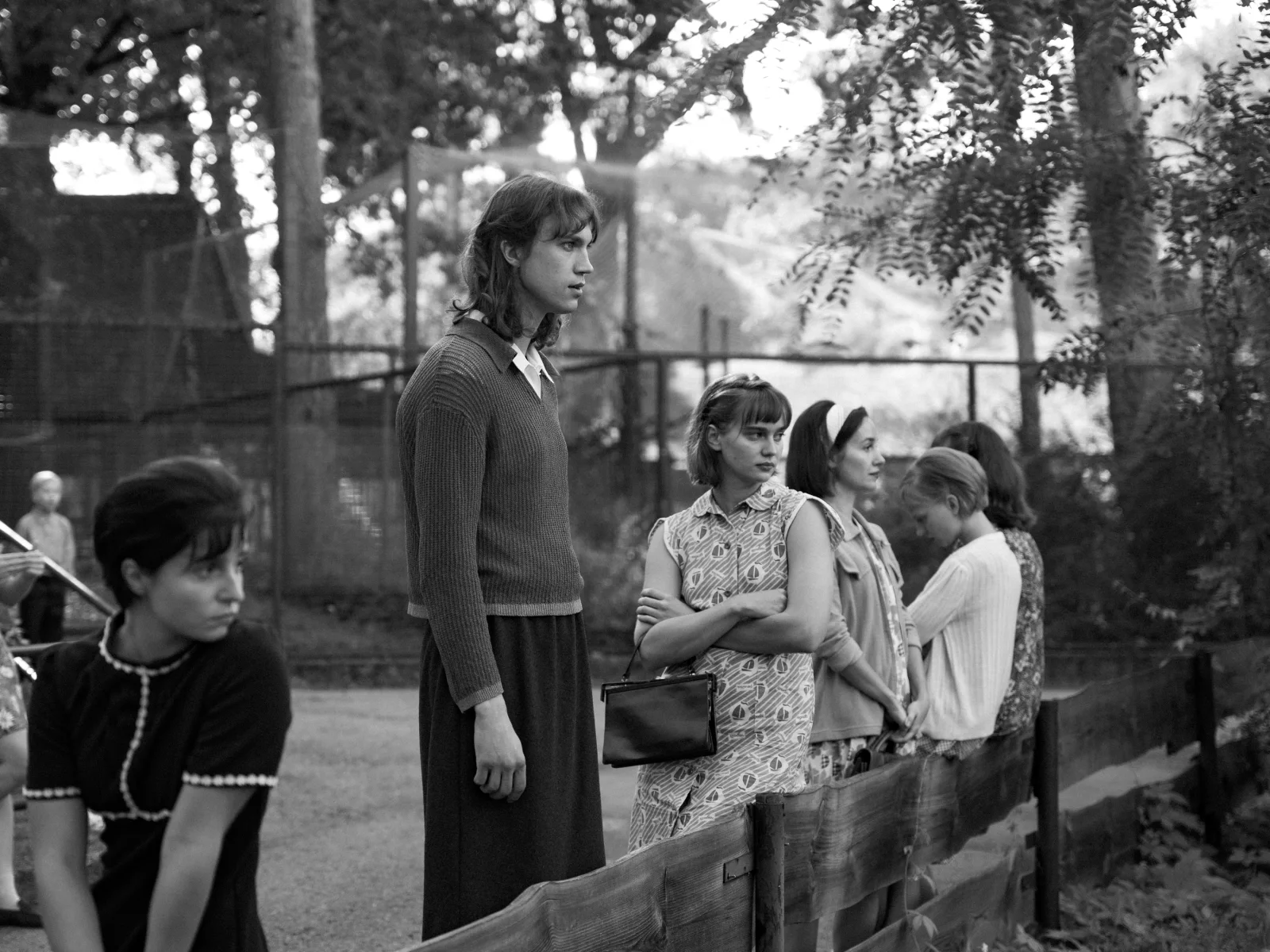
At first, Ulya is unsettling.
Not because she does anything unsettling.
Because we have been remarkably well trained to regard as strange whatever does not immediately fit a familiar category.
Her height.
Her face.
Her gait.
Her voice.
The spectator watches her and, for a few minutes, almost involuntarily joins the small anthropological tribunal that surrounds her.
Girl?
Boy?
Child?
Adult?
Fragile?
Formidable?
Apparently, a decision must be made.
Then Ulya speaks.
And something interesting happens: the question gradually begins to matter less.
Not because her appearance changes.
Because a human being has appeared behind it.
This may be one of the film’s most subtle gestures. Kairišs first allows the viewer to experience the very mechanism he will then dismantle: our habit of reducing a person to the characteristic that unsettles us most.
Her supposed strangeness does not disappear.
Our way of looking at her becomes inadequate.
A Man Plays Ulya
Into this unease comes a casting decision that could easily have become a gimmick.
Ulya is played by Kārlis Arnolds Avots.
A man.
But the word “played” becomes particularly interesting here.
Avots does not seem to be playing at being a woman. He does not construct a feminine impersonation designed to make us admire the transformation.
He plays Ulya.
The distinction is considerable.
After a while, something happens that cinema occasionally achieves better than any argument ever could: we stop checking.
We no longer think constantly about the man playing an adolescent girl.
We see the girl.
And that is precisely where the device becomes beautiful.
He is not playing a curiosity.
He is playing someone he loved.
A Woman, Eventually
Perhaps this is why the film produces such a strange result: the further it goes, the less the sex of the performer seems to constitute essential information.
Ulya is a woman because the character exists as one.
Cinema does the rest.
There is something rather beautiful in that, about acting certainly, and perhaps also about our contemporary obsession with asking the body to provide an immediate and complete explanation of identity.
Ulya’s body does not provide the expected answers.
It is too tall.
Her voice is too deep.
Her presence too singular.
So what?
Basketball as Geometry
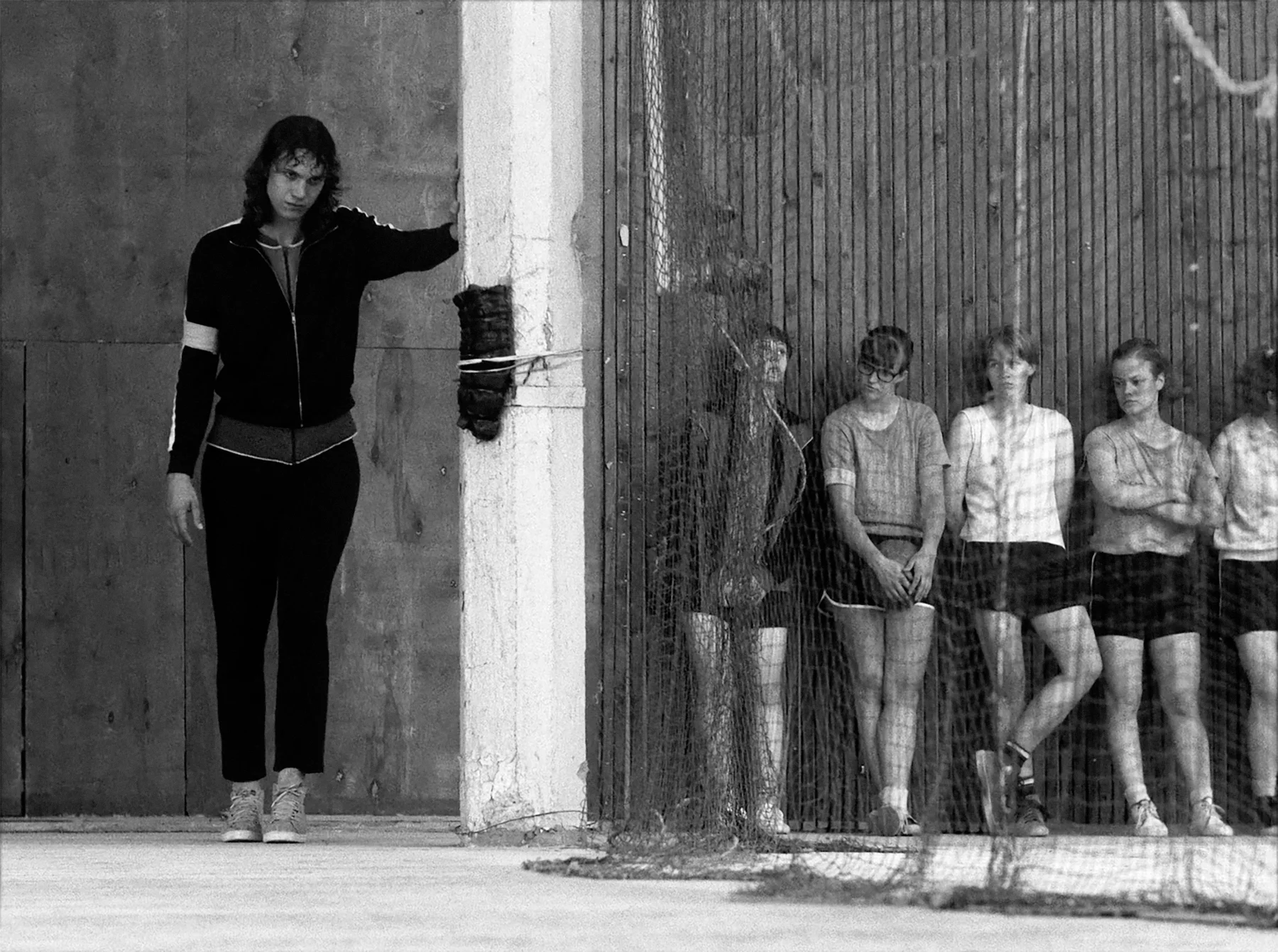
Then basketball arrives.
And suddenly the body that had disturbed every proportion becomes a perfect answer to space.
Here, too, the film avoids an easy conclusion.
Ulya is not merely “saved” because her difference proves useful.
That would be a rather melancholy moral: be different, children, provided the economy eventually discovers a practical use for your anomaly.
What changes is subtler.
On a basketball court, her height ceases to be a social offence.
It becomes a fact.
Then come work, intelligence, precision.
The real Ulyana Semjonova would grow to 2.10 metres and become a two-time Olympic champion, three-time world champion and ten-time European champion.
Height alone does not produce that kind of success.
The Low Hum of Empire
Around basketball, another presence circulates through the film: the Soviet apparatus.
It does not need to be constantly underlined.
It is there like atmospheric pressure.
Talent exists.
Then an institution notices it.
Organises it.
Frames it.
Moves it.
Quietly explains what it might become.
The film does not turn Ulya into a walking political manifesto.
Constraint slips into corridors, into decisions made elsewhere, into the peculiar sensation that an individual destiny has also been noticed as a resource by something vastly larger.
Ulya’s response possesses an understated nobility.
She returns to the game.
To sport.
To what she can do honestly on a court.
In a world where so many people seem determined to decide what she represents, she insists on deciding how she plays.
It is less spectacular than rebellion with a flag.
It may be more difficult.
Integrity as a Form of Resistance
This is why Ulya is also, deeply, a film about integrity.
A curiously unfashionable word.
We speak a great deal about identity.
Rather less about integrity.
Identity asks: Who am I?
Integrity asks: What will I refuse to betray when other people have decided who I ought to be?
Ulya must, of course, search for herself.
Her family sees her height.
Sport sees her potential.
Institutions see what they might obtain from her.
Other adolescents see the anomaly.
Everyone arrives carrying a label.
Ulya has to find the space between all those definitions.
Adversity Does Not Always Need to Shout
Adversity does not always arrive wearing a villain’s moustache.
It can be family concern.
A glance held too long.
A silence.
A well-meaning but narrow idea.
An institution convinced that it knows what is best for you.
A joke.
A locker room.
A way of looking at you before you have even spoken.
We sometimes have an extremely cinematic idea of oppression: it ought to identify itself clearly, preferably beneath threatening lighting and embodied by an actor we can immediately despise.
Real life tends to have better manners.
Ulya understands this.
Finally Seeing Ulya
Ulya is not a film in any hurry to explain its heroine.
It first allows us to look at her sideways.
Then directly.
Then to watch her play.
Then think.
Then choose.
Perhaps Ulya was never difficult to understand.
Perhaps we simply arrived carrying too many definitions.
The film tells the story of an extraordinarily tall teenage girl who would become one of the greatest basketball players in European history, but her most interesting achievement on screen may not yet be an athletic one.
And perhaps this is what the almost square frame ultimately reveals:
some people are not outside the norm.
The norm was simply too small.